
Most people still see makhana as a simple roasted snack eaten during evenings. But in reality, its use in cooking is much wider. In Indian kitchens, makhana is slowly becoming an ingredient rather than just a snack. This shift is happening because people are looking for healthier versions of everyday meals without changing taste completely. Raj Rekha Makhana supports this idea by providing clean, evenly processed fox nuts that cook well and absorb flavors properly.
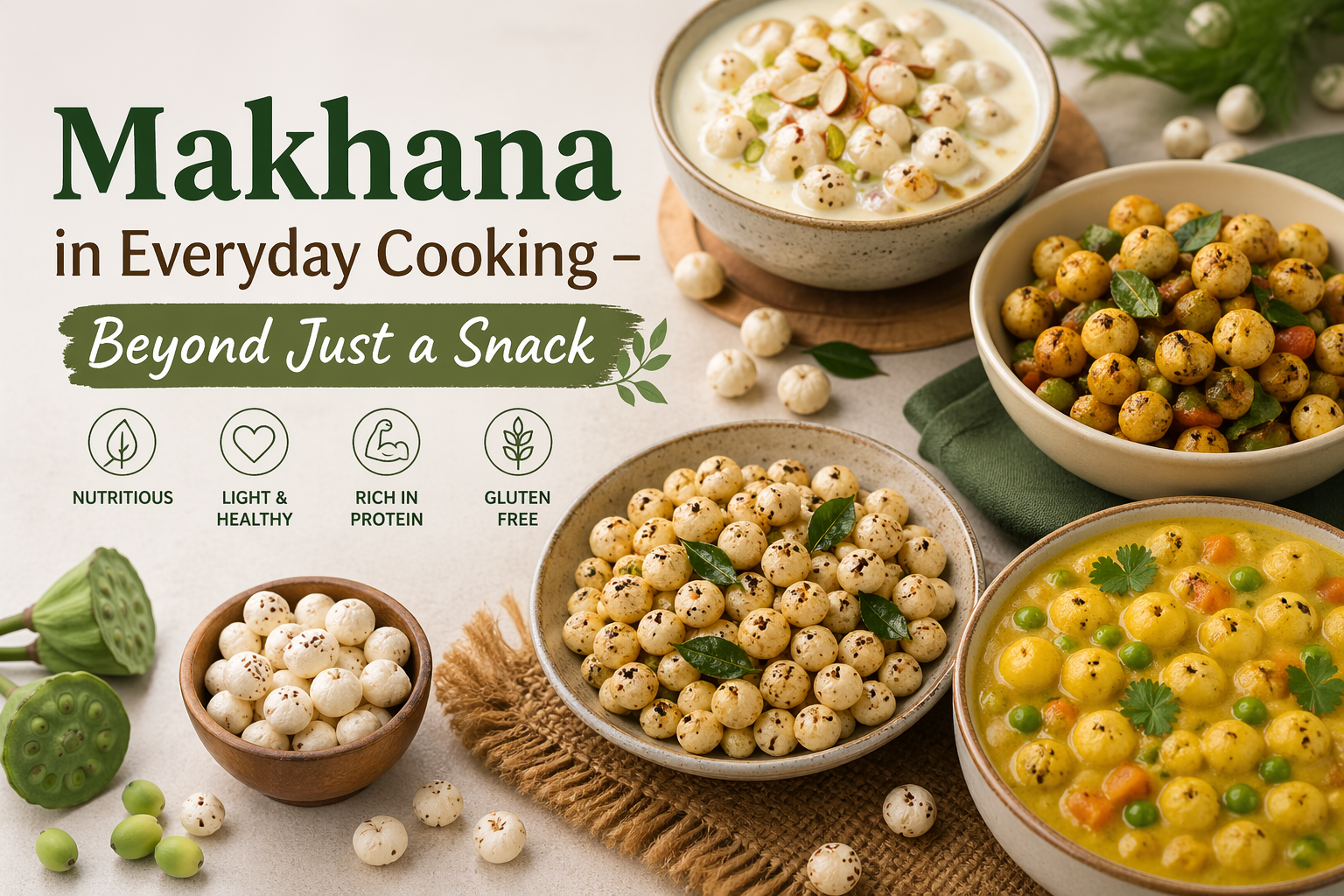
In traditional cooking, makhana has always had a place in dishes like kheer. But now it is being used in much more creative ways. In gravies, makhana is used to add texture and thickness. It blends well with spices and does not overpower the dish. In soups, it is sometimes crushed and used as a natural thickener. Even in modern fusion cooking, chefs are experimenting with makhana-based salads and trail mixes.
One of the most loved preparations remains makhana kheer. It is simple, comforting, and nutritious at the same time. Milk, cardamom, and roasted makhana come together to create a dessert that feels light but satisfying. Another interesting use is spiced makhana mixes. Instead of serving chips or namkeen with tea, many households now serve roasted makhana with light spices.
What makes makhana special in cooking is its flexibility. It does not dominate the dish but enhances it quietly. For home cooks, this is very useful because it allows them to make healthier versions of familiar foods without changing family preferences too much.
Cooking habits are not easy to change. That is why ingredients like makhana become important—they integrate without resistance.