

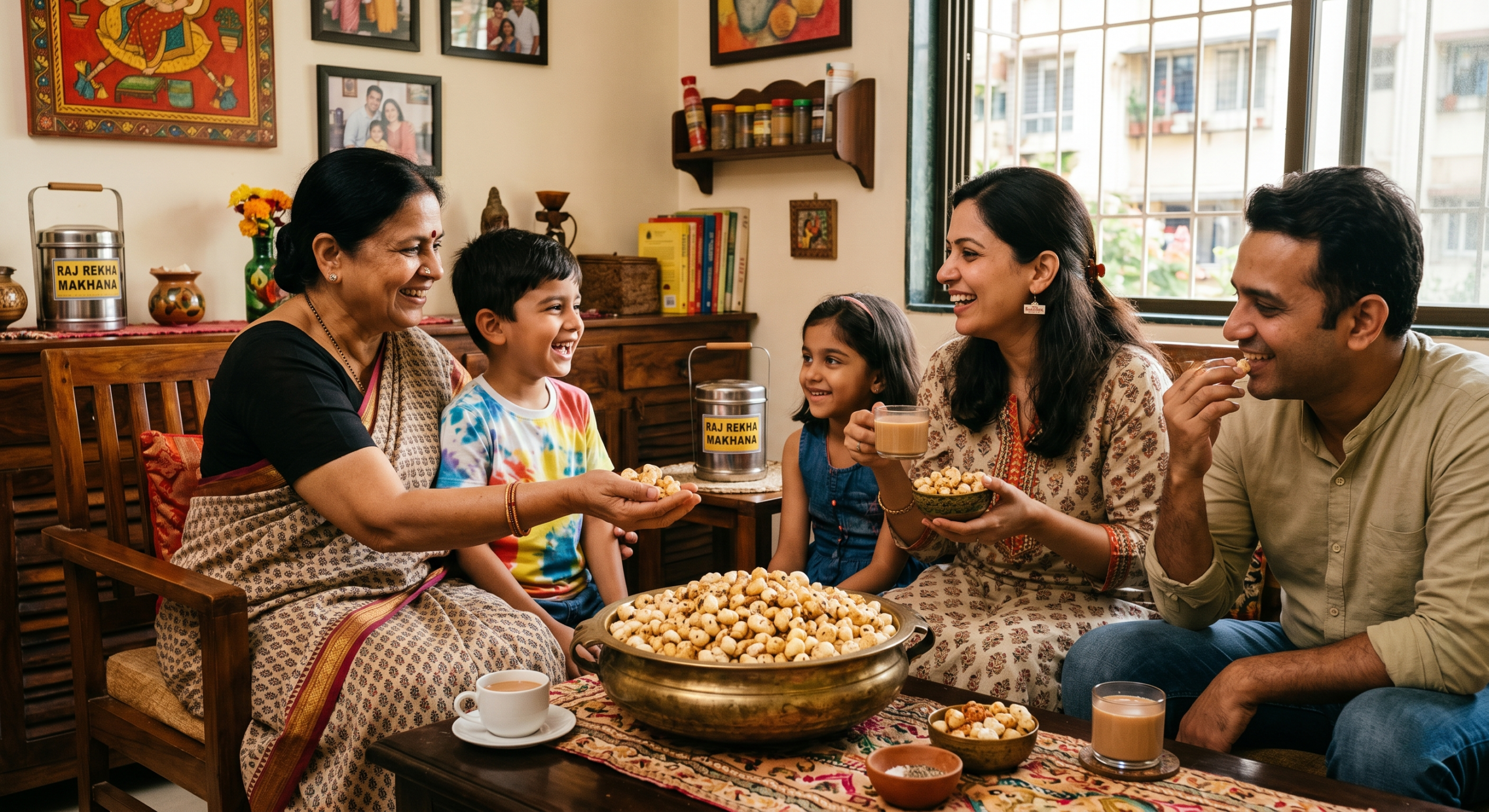
There was a time when makhana was something people only saw during fasting days or religious occasions. In many Indian homes, it stayed stored in kitchen shelves, untouched for most of the year. But slowly, something changed in the way people started eating.
Today, makhana is not just a traditional food anymore. It has quietly entered modern households, office drawers, gym bags, and even travel kits. The reason is simple people are tired of heavy, oily snacks that make them feel lazy after eating. When Raj Rekha started working with makhana farmers in Bihar, the idea was not just to sell a product. It was to bring a forgotten superfood back into everyday life in its purest form. The farmers in Bihar still use traditional pond-based harvesting methods. No shortcuts, no chemical processing. After harvesting, makhana is sun-dried slowly, sorted manually, and then cleaned before it reaches packaging. This is where quality actually begins not in machines, but in hands that have been doing this for generations.
In real life, makhana fits into modern routines very naturally. Office workers roast it lightly and keep it on their desks. Parents give it to children as an evening snack instead of biscuits. Gym-goers eat it post-workout because it feels light but still satisfying. What makes it special is not just nutrition, but how easily it replaces junk food without forcing any lifestyle change.
Instead of telling people to “eat healthy,” makhana quietly becomes part of their habits. That is the real shift happening in Indian food culture. And brands like Raj Rekha are simply making sure this shift is clean, pure, and reliable. There was a time when makhana was something people only saw during fasting days or religious occasions. In many Indian homes, it stayed stored in kitchen shelves, untouched for most of the year. But slowly, something changed in the way people started eating.
Today, makhana is not just a traditional food anymore. It has quietly entered modern households, office drawers, gym bags, and even travel kits. The reason is simple people are tired of heavy, oily snacks that them feel lazy after eating.When Raj Rekha started working with makhana farmers in Bihar, the idea was not just to sell a product. It was to bring a forgotten superfood back into everyday life in its purest form.
The farmers in Bihar still use traditional pond-based harvesting methods. No shortcuts, no chemical processing. After harvesting, makhana is sun-dried slowly, sorted manually, and then cleaned before it reaches packaging. This is where quality actually begins not in machines, but in hands that have been doing this for generations. In real life, makhana fits into modern routines very naturally. Office workers roast it lightly and keep it on their desks. Parents give it to children as an evening snack instead of biscuits. Gym goers eat it post-workout because it feels light but still satisfying.
What makes it special is not just nutrition, but how easily it replaces junk food without forcing any lifestyle change. Instead of telling people to “eat healthy,” makhana quietly becomes part of their habits.That is the real shift happening in Indian food culture. And brands like Raj Rekha are simply making sure this shift is clean, pure, and reliable.